
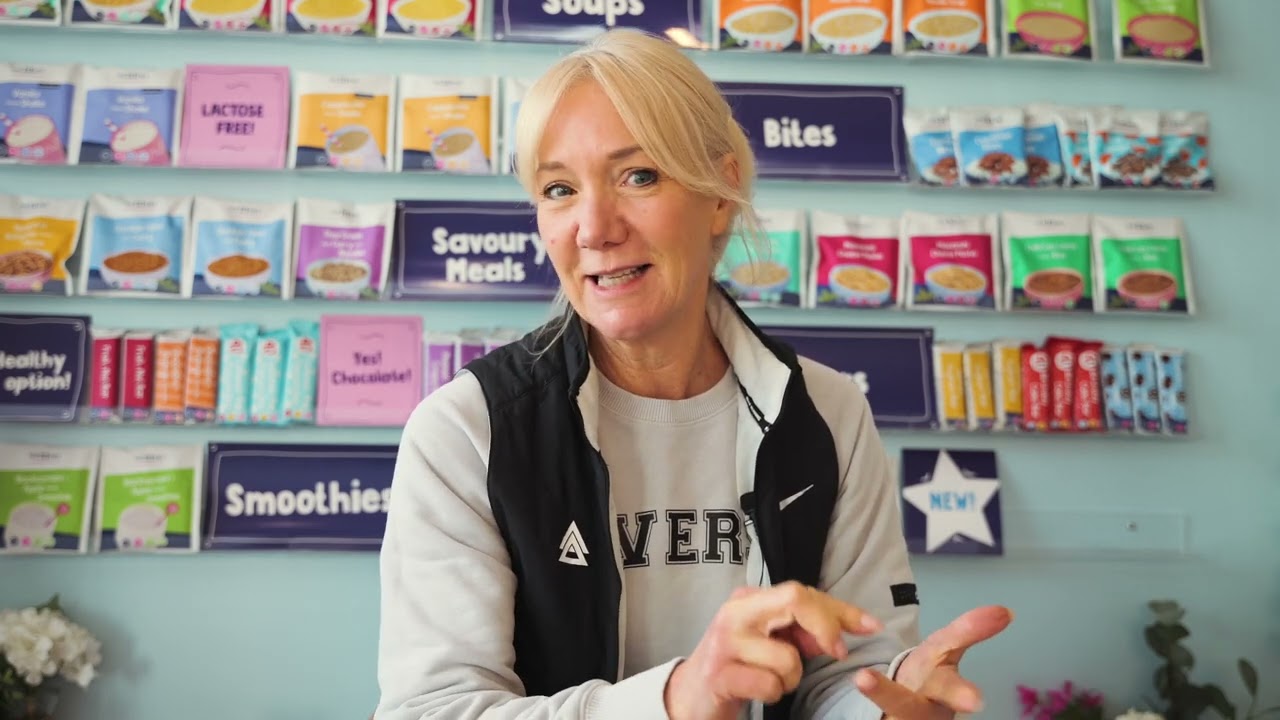
I’ve been thinking about this for a while, and I keep coming back to the same thing. Trust is the only product professional services firms actually sell. Whether you’re a solicitor, an accountancy practice, a consultant, a wealth manager, or an architect. You’re not selling a product someone can pick up and inspect. You’re selling expertise. And the whole buying decision comes down to “do I believe this person can do the thing they say they can do, and do I want them anywhere near my problem?”
So the question I keep asking is: why are most firms still trying to build that trust with a PDF brochure, a stock-photo banner, and a headshot on a bio page?
I’ve got a theory that the firms who crack this over the next two or three years are going to end up looking, in hindsight, like the ones who built proper websites back in 2008. Quietly, almost embarrassingly far ahead of everyone else. And the thing that’s going to do it, I think, is a video library.
Let me explain what I mean and why I’ve become a bit obsessed with it.
What I mean by a video library (and what I don’t)
First, what I’m not talking about. Not a hero film. Not a “we are X firm” sizzle reel with a drone shot of your office building and a string section, that someone watches once at the top of the homepage and then never again. Those are nice to have but they’re not necessarily where I’d start.
I mean an actual library. A growing stack of short, specific videos that live across your site, your proposals, your follow-ups, your LinkedIn, your onboarding emails, your new-hire welcome packs. Things like:
- A partner spending two minutes explaining how they actually approach a tricky kind of case or engagement
- A client telling the story of what it was like to work with you, in their words, not yours, and not filmed in front of your logo
- A 90-second answer to a question that prospects keep asking on the first call
- A walkthrough of what the first 30 days of working together actually looks like
- A senior associate explaining a niche bit of the law or the market or the regulation that they happen to know cold
- A founder or managing partner talking about why the firm exists, but told like a story, not a mission statement
- 60-second explainers for the terms your clients quietly don’t understand but are too polite to ask about
Individually, none of these are a big deal. You could make most of them on a phone. As a library, 20, 30, 50 of them, layered over time, they start to do something a brochure or a bio page or a beautifully art-directed campaign cannot. They make your firm feel known.
And “known” is the thing that turns into “trusted”.
Why video does the trust thing better than anything else
I want to spend proper time on this, because it’s the bit most firms underrate. There are a handful of reasons video moves the needle on trust in a way written content doesn’t, and they stack on top of each other.
People hire people, not firms
When a prospect lands on your website, what they actually want to know isn’t “is this firm credible.” They’ve already half-answered that by the time they arrive. A colleague mentioned you, they Googled you, they saw you quoted somewhere. What they want to know is “what is this person like, and would I want them in the room when things get messy.”
A bio page cannot answer that question. I’m sorry, it just can’t. You can list the deals, the qualifications, the speaking engagements. None of it tells me whether you’re warm or cold, whether you actually listen, whether you think clearly under pressure, whether your instinct is to simplify things or to hide behind jargon.
Two minutes of someone talking will tell me all of those things. Usually in the first thirty seconds. It’s slightly unfair how much signal comes across. You can see how they think, how they pause, whether they gesture when they’re excited, whether they’re the kind of person who says “I don’t know” when they don’t know. You can’t fake that for two minutes on camera. People try. It doesn’t work.
That’s the trust move. Less “here are my credentials”. More “here’s what I’m like to be around”.
It compresses the sales cycle
Most professional services buying is slow, and the reason it’s slow is that the prospect is doing a lot of quiet, invisible vetting. Comparing firms is part of it. The bigger thing is they’re trying to talk themselves into the decision. They’re running the meeting in their head before it happens. They’re wondering how they’ll feel sitting across from you. They’re imagining introducing you to their CFO or their co-founder or their board.
Written content barely touches that loop. Video does a huge amount of it, in the background, before they ever reach out.
I’ve watched this happen. A prospect lands on a partner’s video, watches it at 10pm on a Tuesday on their phone, and by the time they book a call the following week they already feel like they’ve met them. The first call isn’t a vetting call any more. It’s a working call. They’ve skipped the stage where they’re sizing you up, because they already did it, privately, in the library.
Compressing that bit is worth a genuinely stupid amount of money. Every week shaved off the cycle is a week where a competitor doesn’t get the chance to swoop in. Every meeting that starts from “right, let’s get into it” instead of “so, tell me about yourselves” is a meeting that’s much more likely to convert. I won’t put a number on it, but the direction is real.
It scales the partner
This is the one I find most interesting, honestly. In every professional services firm I’ve looked at, the binding constraint on growth is the time of the senior people. Clients want to meet the partner. The partner has a finite number of hours. You can hire associates, you can hire BD people, you can build a beautiful marketing funnel. At some point the prospect wants the partner, and if they can’t have the partner, they go elsewhere.
A video library lets the partner show up in 40 places at once without actually being there. A pitch goes out on Thursday with three embedded videos of the partner explaining their approach to the exact thing the prospect is worried about. A proposal arrives on Monday with a 90-second intro from the partner that the reader watches on their phone while walking the dog. A follow-up email goes out after the call with a video of the partner answering the specific question that came up.
Before video, you couldn’t do any of this. The partner had to literally be in the room, or on the call, or at the dinner. Now, a lot of the work the partner did by being present can be done by a short video of the partner being present somewhere else, six months ago, in front of a phone.
That’s not a marketing gain, by the way. It’s a capacity gain. You’ve added hours to your partners’ weeks without adding partners.
It compounds
A brochure is a one-time asset. You make it, you ship it, it slowly goes out of date, you redo it in three years. Its value peaks on day one.
A video library is the opposite. Each piece is useful on its own, but the real value is in the compounding. After six months you’ve got something you can drop into any proposal. After a year you’ve got a resource that prospects actually browse, looking for the video on the thing they’re worried about. After two years you’ve got something a competitor genuinely can’t replicate by next Tuesday. They’d need to film, edit, and distribute two years of content just to catch up, and by then you’re another two years ahead.
This is the bit that makes it an actual moat rather than a marketing tactic. Most things in marketing depreciate. A library appreciates. The longer you’ve been doing it, the more useful it becomes, and the harder it is to copy.
It lets you say the quiet things out loud
Here’s one I didn’t expect, but it’s turned out to matter a lot. The stuff that actually builds trust with a sophisticated buyer is rarely on anyone’s website. It’s the things partners say on the second call, once the performance has dropped. “Honestly, a lot of firms will tell you X, but in practice Y.” “The thing most people get wrong about this is Z.” “Between you and me, you probably don’t need the whole package, just this bit of it.”
That’s the stuff that makes a buyer lean in. That’s the stuff that makes them think “okay, this is a real person who’s actually thought about my situation.”
Written content almost never gets there. It’s too exposed. Once it’s on the page it feels like a position, and legal will want to sand the edges off it. But in a video, a partner speaking in their normal voice, it lands as what it is: a practitioner’s honest view. Something about the medium gives people permission to speak more candidly. I’m not completely sure why, but it’s consistently true.
It makes asynchronous buying feel human
More and more buying happens asynchronously. People aren’t booking a discovery call first. They’re researching for weeks, on their phone, at weird hours, before they ever put their hand up. The firms that feel human during that asynchronous stretch are the ones that get the call. Everyone else just feels like a website.
Video is basically the only thing that carries human presence across an asynchronous gap. Text can be clever. Design can be beautiful. But only video makes someone feel like they’ve met you when they haven’t.
Why I think most firms haven’t done this yet
There are a few reasons, and I’d gently push back on all of them.
“We don’t have time.” Fair. But the reason you don’t have time is partly that your partners are repeating the same explanations in pitch after pitch, call after call. A library is the thing that gives you that time back. It’s an up-front cost that buys you down-the-line capacity. You’re trading time now against compounding time later, which is always a good trade.
“Our people aren’t camera people.” Mostly not true, in my experience. The people who are best on camera in this world are usually the ones who think they’d be terrible, because they’re the ones who don’t try to perform. They just talk. That’s what you actually want. The polished, media-trained partner who slides into presenter-mode comes across a bit hollow. The slightly awkward one who pauses and rethinks mid-sentence comes across as real. You want real.
“It feels a bit much.” I get this one. Professional services are conservative for good reasons; clients are paying for sober judgement, not theatrics. But a quiet, well-shot, no-music two minutes of a partner explaining how they think about something is about the least theatrical thing you could put on your website. It’s the brochure that’s doing the performing, really. The stock-photo team-around-a-laptop shot is the theatrical thing. A partner talking plainly into a camera is the sober one.
“We’ve tried video, it didn’t work.” Usually when I dig in, what they tried was a one-off video that they didn’t push out. One big piece, a lot of money, a launch moment, then nothing. That’s not video marketing. That’s an ad. A library is the opposite: lots of small pieces, low production cost per unit, distributed across every surface where a prospect might land. If you tried a sizzle reel and it didn’t convert, that’s evidence about sizzle reels, not about video.
“Won’t it go out of date?” Some of it will. A lot of it won’t. The “how I think about X” videos age like wine. A partner’s perspective on how to approach a restructuring doesn’t change much year to year. The market commentary stuff ages quickly, and that’s fine, you just replace it. The client story stuff basically never ages. Treat the library like a garden, not a monument. And when something does need updating, the act of updating it shows you’re staying current.
Where I’d actually start
If I were a managing partner thinking about this, I wouldn’t start with the homepage hero film. I’d start with the boring middle of the funnel, the bit between “they’ve heard of us” and “they’ve signed”. That’s where the trust-building work mostly gets done and it’s also where firms put the least effort.
Pick the five questions you get asked in every pitch. Film a partner answering each one in 90 seconds. In their office, on a phone if you have to, no script, no autocue. Drop them into your follow-up emails. See what happens to your reply rates and your close rates over the next three months.
Then film one client telling their story. Not a testimonial. A story. A case study. What was the problem, what did working with you look like, what changed, what did they not expect. Twenty minutes of footage, cut down to three. Put it on the case study page and embed it in your proposals.
That’s six pieces of content. It’s a library, just barely. And it’ll already be doing more work for trust than another redesign of the bio page ever would.
From there you just keep going. Every time a partner finds themselves explaining the same thing on a call for the fifth time, that’s a video. Every time a client says something lovely in a meeting, that’s a video. Every time someone on your team knows something nobody else in the market knows, that’s a video. The library builds itself once you start noticing.
The bit I keep coming back to
This is genuinely the most interesting shift happening in professional services marketing right now, and it’s wide open. Most firms are still arguing about whether to post on LinkedIn twice a week or three times. Meanwhile the ones who quietly start building a library this year are going to have, by 2028, something their competitors literally cannot buy their way into matching.
Trust is the product. Video is the medium that carries trust better than any other. A library, not a single film, is how you compound it.
